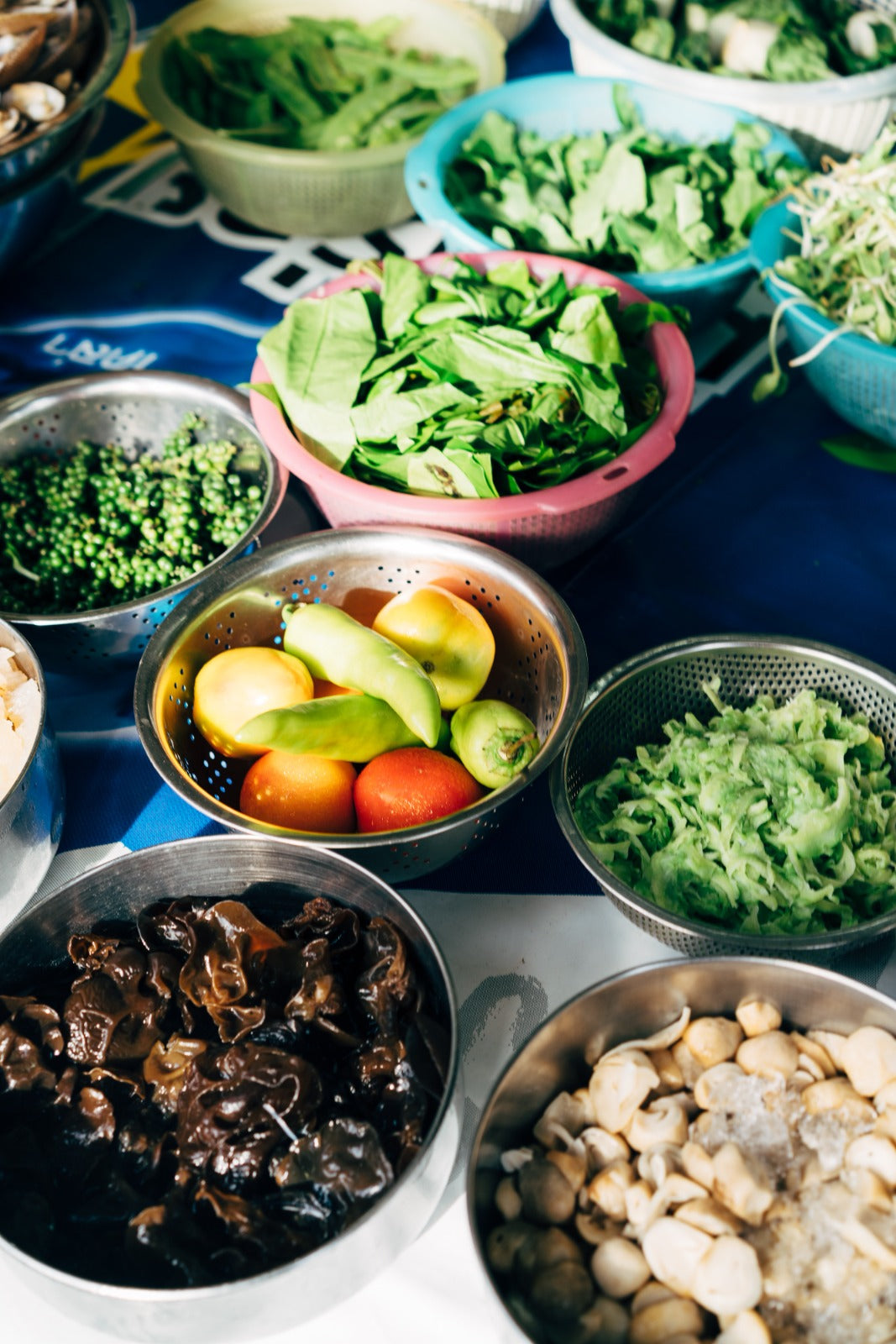
Which foods warm and which cool? And what is the 5-element diet in TCM?
Nutrition is a key component of Traditional Chinese Medicine. TCM assumes that every food is associated with one of the five elements. The effect varies depending on how the food is prepared: warm foods don't necessarily have a warming effect, while cold foods don't necessarily have a cooling effect. In this guide, you'll learn how to keep your life energy (Qi) in balance and what TCM nutrition entails.
What are the basic principles of nutrition in Traditional Chinese Medicine (TCM)?
A central assumption of TCM is that well-being is linked to the flow of Qi. When life energy can move freely along the meridians, a person feels well. In Traditional Chinese Medicine, pain indicates blockages in the body. These are caused by an imbalance.
In TCM, the philosophical yin-yang principle describes how opposing forces are interdependent, but also in constant competition with each other. If one side gains more influence, for example, due to poor nutrition or stress, the deficiency of the other side causes symptoms.
What are general nutritional tips in Traditional Chinese Medicine?
In addition to the specific rules for a diet based on Traditional Chinese Medicine, there are also more general principles. These largely agree with the findings of modern Western medicine.
- Eat regularly: Skip meals only in exceptional circumstances.
- Eat with pleasure: Take your time while eating
- Eat in moderation: Stop eating when you are full
- Distance between meals: Wait about 4 hours between meals
- High-quality food: Eat only organically grown food whenever possible
- Only "real" food: Avoid chemical ingredients and supplements
Regional and seasonal foods: Focus your diet on locally sourced foods that are currently in season.
- Less bad drinks: Avoid coffee, black tea and alcohol
- More good drinks: Drink plenty of fresh water and herbal teas whenever possible
- The main meal, and therefore the most energy-dense one, is breakfast. Lunch should be substantial, but not as substantial as breakfast. Dinner is the smallest meal and should not be eaten after 7 p.m.